

Stunning Kottayam home, built using recycled materials, is a masterclass in sustainable luxury
Mail This Article


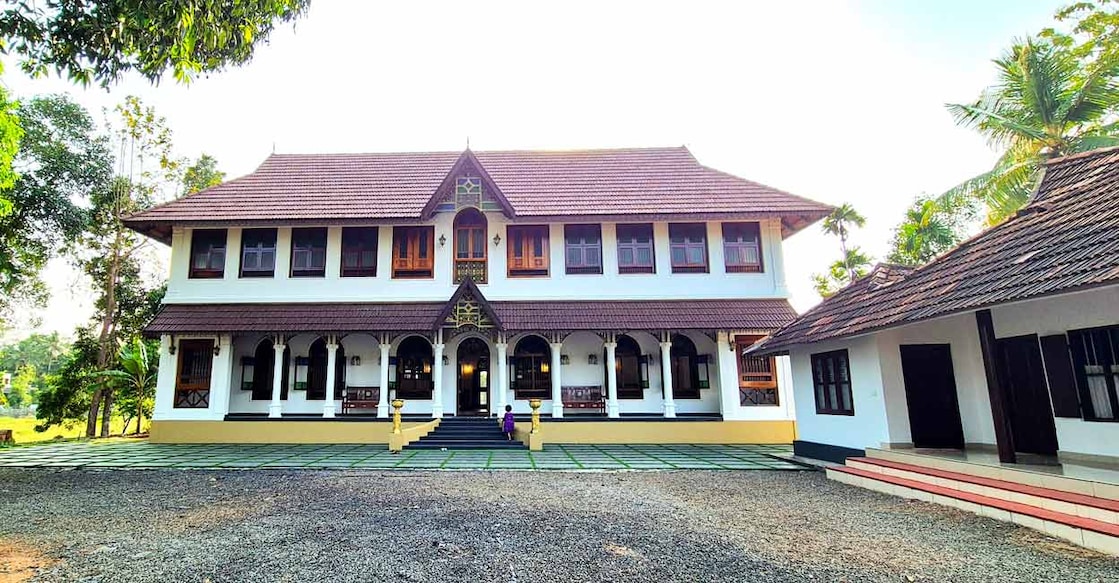
Nestled in the serene locale of Chungam in Kottayam, a breathtaking home stands as a proud testament to Kerala's rich architectural heritage. Designed in the style of an elegant, traditional Christian mansion, this 4,300-square-foot residence is the dream project of Sanal Jose, an expatriate who wanted to build a sustainable home without compromising on old-world grandeur. Sprawled across a lush one-acre plot, this remarkable structure is built almost entirely from salvaged, upcycled, and reclaimed materials.
What makes this home truly exceptional is its soul—it is a mosaic of history and architectural salvage, painstakingly collected from various parts of Kerala. Rather than buying brand-new materials, Sanal chose to breathe new life into discarded treasures, creating a space that feels deeply personal, incredibly warm, and remarkably eco-friendly.

The story behind those massive heritage windows
The most striking feature of the home’s facade is its array of massive wooden windows. Over 60 of these giant windows frame the exterior, lending it an air of timeless majesty. Sourced from a demolished ancestral tharavadu in Thalassery, these windows are incredibly heavy—so much so that it took at least five people to lift a single frame. These vintage fixtures are the primary source of the home's heritage character, bathing the interiors in soft, natural light while telling a story of a bygone era.
The sustainability theme extends right up to the roof. The clay tiles that cover the sprawling structure were salvaged from an old school building that was being demolished in Muvattupuzha, proving that high-quality, durable materials are often just waiting to be rescued.
A seamless blend of heritage and modern living
Inside, the home offers a carefully curated layout that maximises space and functionality. The ground floor houses a welcoming sit-out, a formal living room, an expansive family living area, a dining space, a modern compact kitchen with an adjacent work area, and three bedrooms with attached bathrooms.
The formal living room is a nod to colonial architecture, complete with a beautifully crafted faux fireplace made from ferrocement. Moving past the living room, you enter the central heart of the home, which serves as a sprawling hall partitioned seamlessly into a dining zone and a family living space. To give each zone its own unique personality, Sanal used different patterns of vibrant Moroccan tiles, creating a stunning visual demarcation on the floor.
The bedrooms continue the vintage theme with an elegant white colour palette, classic wardrobes, and attached bathrooms. To keep things fresh, each bedroom features a completely different style of flooring, making every room a unique experience.
An open-concept upper deck and clever cost-saving hacks
The upper floor spans approximately 2,000 square feet and has been consciously designed as a massive open hall to keep maintenance simple. Secured with a GI truss roof and topped with reclaimed tiles, this open space is perfect for family gatherings or quiet evenings. The hall is lined with 19 vintage-style windows and a grand wooden door, maintaining the home's signature design language.
Building a home of this scale with heritage aesthetics can easily break the bank, but Sanal used several clever design hacks to keep expenses in check. For instance, instead of using expensive timber for the ceiling panelling, the team used ferrocement finished with a highly convincing wood texture. This simple trick saved a significant portion of the budget while maintaining a luxurious aesthetic.
In total, the construction and complete furnishing of this magnificent 4,300-square-foot home cost approximately ₹1 crore—an incredible achievement for a house that looks like a priceless heritage estate.

 Add as a preferred source on Google