

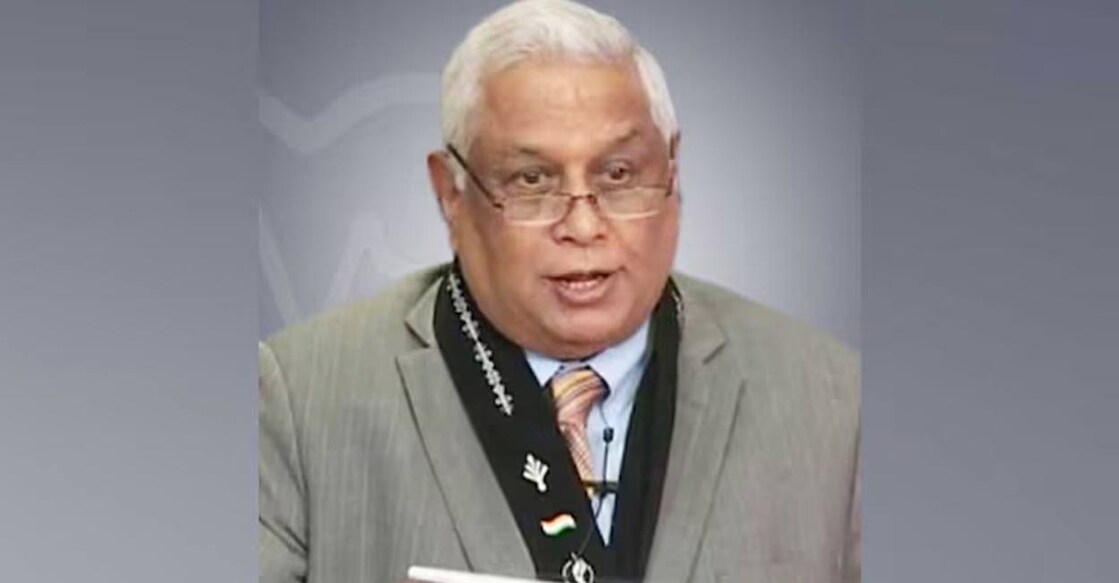
Denied a surgery seat, became a tutor & transformed angioplasty: Story of Dr Mathew Samuel Kalarickal
Mail This Article
When Mathew Samuel Kalarickal, a young doctor, couldn’t secure a seat in surgery after completing MBBS, he began his career as a tutor in pediatric surgery.
It was during his time as a student in Chennai that he came across several articles about angioplasty, a minimally invasive cardiac procedure. Back then, Indians could only read about angioplasty, he once said. Dr Andreas Grüntzig in Zurich was widely regarded as the pioneer and global authority in angioplasty then.
Mathew Samuel wrote letters to Dr Grüntzig, sharing his ideas and concepts, and it soon caught the renowned cardiologist’s attention. Impressed by the young Indian’s curiosity and originality, Dr Grüntzig arrangedfor him a scholarship and invited him to Zurich.
Soon after Mathew Samuel joined Dr Grüntzig in Zurich, the duo moved to Emory University in Atlanta, USA. There, they carried out collaborative research and clinical trials in angioplasty.
In 1986, Mathew Samuel returned to India. At the time, India lagged nearly a decade behind the US in angioplasty technology and practice, he once said in an interview. Undeterred, he set out to bridge that gap, and that same year, he performed his first angioplasty procedure at Apollo Hospitals in Chennai. By the end of his first year, he had successfully performed angioplasty on 18 patients.
The following year, he began training other doctors in this procedure. Over time, Mathew Samuel Kalarickal became the founding figure as well as the master of angioplasty in India. His contributions to India's health sector also earned him numerous honours, including the Padma Shri and the Dr B C Roy Award.
In later years, under the leadership of Dr Mathew Samuel Kalarickal and Dr Sai Satish, an interventional cardiologist, India introduced bioresorbable stents, which dissolve in the body over time, unlike traditional metal stents. Even as his health declined, Dr Kalarickal remained unwavering in his dedication and till just days before his passing, he would arrive at the hospital in a wheelchair and continue to perform angioplasties on patients. He lived and worked by the heartbeat of his patients, right up until his own heart finally came to rest.
 Add as a preferred source on Google